


Due to the current lockdown you are unable to see your doctor but you have some skin concerns.
Here is a list of skin changes during pregnancy and how you can take care of them.
A number of skin conditions can crop up during pregnancy as your body undergoes various physiological and hormonal changes. On the other hand you maybe already be having a pre-existing skin condition which may increase during pregnancy. We will go through some of the common skin ailments during pregnancy in this article.
Stretch Marks:
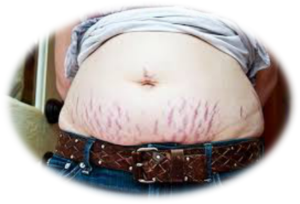
Why do they occur?
This is the most common skin change observed by pregnant women. Stretch marks tend to occur during pregnancy over the areas where you tend to put on weight during pregnancy like your tummy, breast, thighs and buttocks.
How do I treat them?
It’s better to prevent stretch marks than to treat them once they have occurred. In order to do so make sure your skin is well moisturized especially in the areas where you will be putting on weight like your tummy, breast, thighs and buttocks. If you have dry skin you may have to do so 2-3 times a day. Ideally moisturize once after shower and once before bedtime.
Which is a safe skin product to use for stretch marks?
There are a variety of anti- stretch mark creams available in stores. You need to pick one which is basically a heavy moisturizer not a light one. Body oils are good options. You can also use something as simple as coconut oil. The idea is to keep your skin well moisturized.
Will my stretch marks go away after the pregnancy?
Stretch marks usually become lighter after the pregnancy but do not completely go away.
If they bother you, you must see your Dermatologist who can help you with effective procedures like microneedling, chemical peels and other advanced techniques for making them less visible. Also keep in mind that early stretch marks, which are slightly reddish in color, respond better to treatment. Hence don’t delay in seeking solutions.
Acne/Pimples
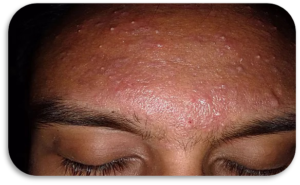
If you already have acne some of you may experience an increase in the severity during pregnancy. Or you could have had clear skin earlier and develop acne in pregnancy.
Can I continue my routine acne treatment during pregnancy?
Some of the routine acne medications like isotretinoin and antibiotics are not safe to be continued during pregnancy as they can harm the pregnancy. You should inform your doctor about your pregnancy so that you can be switched to a medication that is safe to be used during pregnancy.
What skin care routine can I follow if I get acne during pregnancy?
Here are some skin care measures that you can follow if you develop acne during pregnancy:
- Wash your face with a mild cleanser or face wash twice a day in order to prevent the oil build up in your pores.
- During summers using a toner after cleansing can be refreshing. Preferably use it once a day. Also avoid the alcohol based ones which can dry your skin.
- Do not pick on the acne as it will lead to scaring.
- Use non- comedogenic (this is usually mentioned on the product or you can take the help of the store manager) skin products so that they do not block your pores and worsen the acne.
- If you have oily hair, wash daily or on alternate days and tie your hair away from your face.
Can I get facials done for reducing my pimples during pregnancy?
The regular “facials” done at parlors which involve a facial massage with heavy creams should be avoided. That will only flare up your acne.
Safe skin treatments can be done to control the acne, to keep you glowing even during pregnancy.
If you wish, you can also consult the dermatologist at our clinic. The details for which are mentioned at the end of this article.
Melasma:
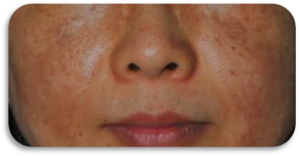
What is Melasma?
Melasma or what is commonly called “the mask of pregnancy” are pigmented patches of skin over the bridge of your nose, cheeks and forehead.
What causes Melasma?
The hormonal changes during pregnancy are known to trigger melanin, which is a substance that normally gives colour to hair and skin.
How do you treat it?
It normally tends to fade away after pregnancy over a period of time. But in some cases it can be persistent for many years or not go way completely.
What should I do if my Melasma is persistent?
There are effective creams and serums available that help to reduce the pigmentation. You can prevent it from worsening by using a sunscreen on a daily basis, not only when you are out in the sun. Nowadays due to use of various LEDs, sunscreen use is recommended even at night. Correct use of a sunscreen is important to make it to work for you. You can also consult our dermatologist at the clinic who can recommend you the appropriate creams, effective procedures such as chemical peels, laser treatments, skin microneedling and other advanced procedures.
Linea Nigra:
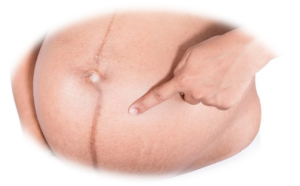
What is linea nigra?
Linea nigra or the pregnancy line is a dark vertical line running across your abdomen from the umbilicus downwards towards the pubic bone. It occurs due to the hormonal changes of pregnancy.
How do you prevent linea nigra?
Unlike stretch marks lineanigra is not preventable as it’s a natural part of pregnancy. The good part is it tends to fade away naturally after pregnancy within a few months.
Eczema and Pregnancy:
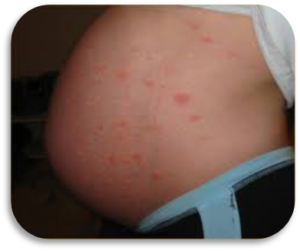
I have eczema and I am currently pregnant, can I continue my treatment for the eczema?
Eczema can worsen during pregnancy due to fluctuating hormones. Please consult your doctor to make sure that the current treatment that you are on is safe to be continued in pregnancy. Inform your doctor about the pregnancy so that you can be given medications which are safe for you and your baby. If you wish you can also consult the dermatologist at our clinic. The details for which are mentioned at the end of this article.
Avoid using hot water for bath. Use a mild moisturizing soap or body wash, without any fragrance. Make sure to keep your skin well moisturized to prevent it from drying out and in turn aggravating the eczema.
Psoriasis and Pregnancy:
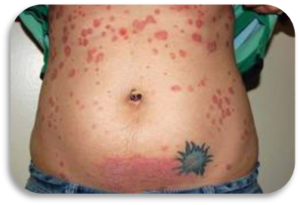
Is it safe for me to plan a pregnancy if I have psoriasis?
If you have psoriasis and are on medications it’s important for you to consult your doctor before planning a pregnancy. Certain medications that treat psoriasis are known to cause low sperm count in males, miscarriages or birth defects in the developing fetus. Hence it’s important to discuss with your doctor about your desire to get pregnant so that you can be switched to safer medications before you conceive.
If you wish you can also consult the dermatologist at our clinic. The details for which are mentioned at the end of this article.
Will my psoriasis worsen during pregnancy?
This can go either way. For some women the symptoms get better during pregnancy especially the first and second trimester, whereas some women may witness a worsening of their symptoms. Unfortunately there is no way to predict how each patient may respond.
If I undergo a C-section will I develop psoriasis over the scar area?
If you undergo a C–section you might develop a flare up of your eruptions around the C-section scar. This is called as Koebner’s phenomenon. You may consult your dermatologist on how to manage this condition if you need to undergo a C-section.
If you need to consult with a dermatologist, you may consult our Gynaecworld dermatologist, Dr.Ms.Gulrez. Tyebkhan., MD (Dermatology).You can book yourself for an online consultation with her in view of the current lockdown. Dr. Gulrez will be available online
Monday to Friday: Morning: 10.00 to 11.00 am
Evening: 04.00 to 05.30 pm
To book an appointment please call:
Ms. Mubashira on + 917738910171 between 9 am to 2 pm.
Ms. Trupti on + 917715069769 between 2 pm to 7 pm.
Sources:
- Skin conditions during pregnancy, The American College of Obstetrics and Gynaecologists website.
https://www.acog.org/patient-resources/faqs/pregnancy/skin-conditions-during-pregnancy
- Eczema in pregnancy
Sophie Weatherhead, Wellcome clinical training fellow,1 Stephen C Robson, professor of fetal medicine,2 and Nick J Reynolds, professor of dermatology1
BMJ,2007 Jul 21; 335(7611): 152–154.
- Psoriasis and Pregnancy: What to know, Web MD.
https://www.webmd.com/skin-problems-and-treatments/psoriasis/psoriasis-pregnancy-what-know#1
From the Team at Gynaecworld